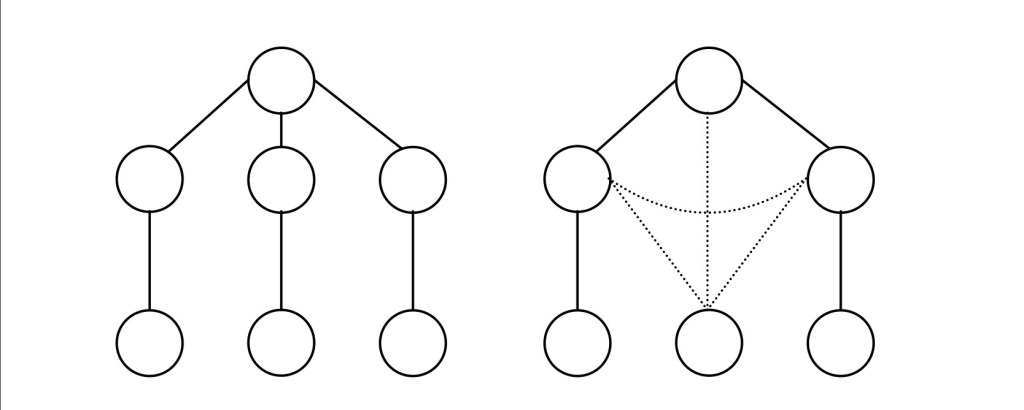
In the past few weeks, since explaining how we might visualize a labor network, my main focus has been what I am calling Labor Gap Response Theory. This is a culmination of all the material I’ve read for this independent study so far. In recognizing that organizations have complex interdependent labor networks in which turnover exists, it begs asking how the labor network responds to this turnover or “gap.” Labor Gap Response Theory states that when a personnel gap occurs in a labor network, the organization’s response to said gap affects the sustainability of the organization’s human resources and that the response shapes and is shaped by cultural labor norms.
There are various ways in which this can be approached, but my plan is to first study employee burnout. I believe that overly “leaned” organizations along with long hiring process times enables employee burnout and that this burnout increases the propensity for turnover contagion. My plan is to further study this at the interface level that I have discussed in prior material. From this, a second hypothesis could follow; that the interface group experiences higher burnout which leads to higher turnover. These hypotheses, although much more socially derived than mathematically, could serve to develop new ways in which we model networks within the field of industrial engineering. My hope is for this concept to eventually lead us toward more predictive models of organizations and networks but much more work from other perspectives must also be integrated. Models have been used in material science to predict and plan microstructures which arise in certain materials. Along with the use of comprehensive surveys of behavior and attitudes in labor networks and advancements in labor network models, it could be possible to predict the sustainability of organizations and make decisions before large organizational collapse occurs.
It is my firm belief that companies owe it to the communities in which they operate to not only provide the benefit of fair employment to those communities, but to also make sustainable human resource decisions to maintain or grow that employment. But there is a lot of work to be done in order to push these ideas and theory into practice. My hope is for this theory to broaden the scope and field of anthroengineering to provide future students with the tools to study and improve the human labor systems they inhabit.
 The Working Anthroengineer
Leave a comment